Mastering Line Tension Without the Stress
Snapped lines are one of the most common frustrations in fishing games. This article explains what tension represents and shares a calm routine for landing bigger catches.
What Tension Represents
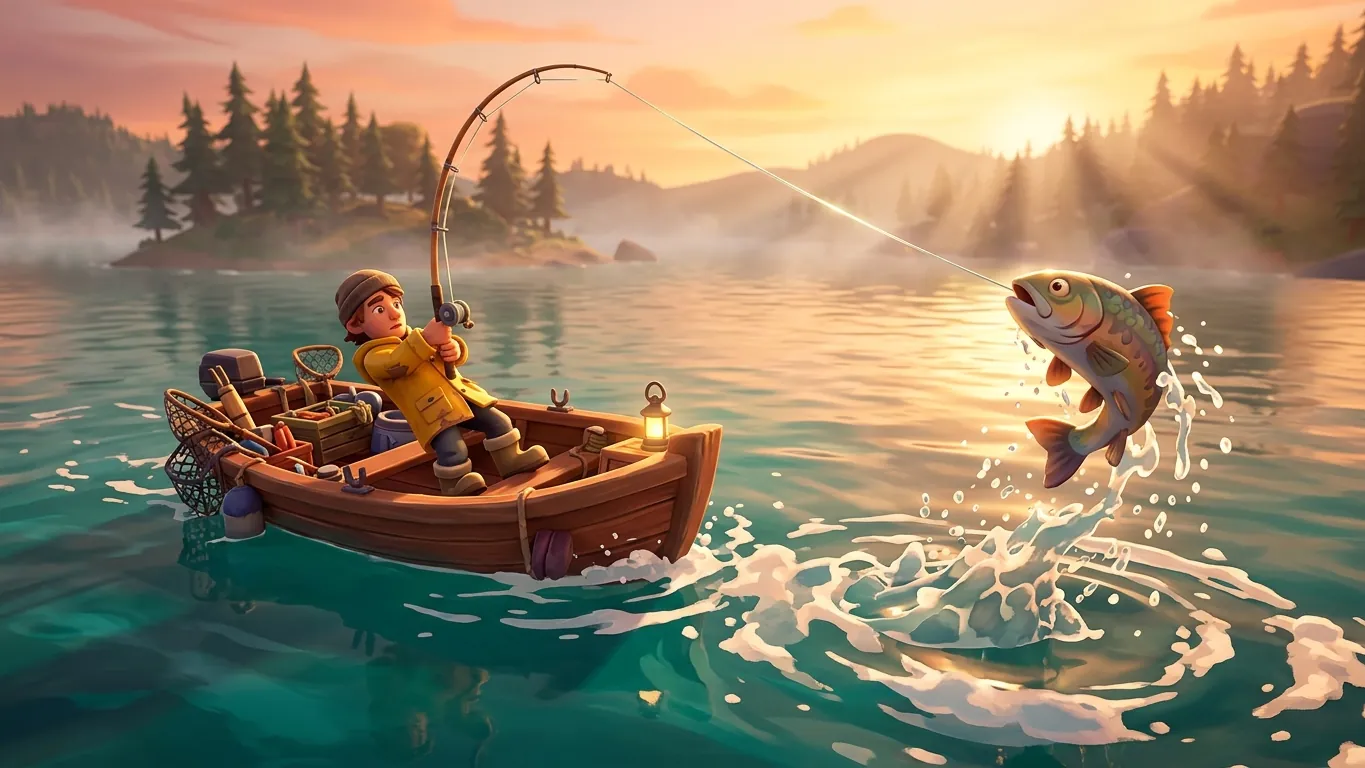
In most fishing games, line tension is a simple way of showing how much stress your line is under. When a fish pulls away while you reel in, tension climbs. When the fish rests and you ease off, tension drops. If tension stays too high for too long, the line breaks and the fish swims away.
Games show this in different ways. Some use a meter that fills up, some change colours from green to red, and others rely on the bend of the rod, sound effects or controller vibration. Whatever your game uses, the idea is the same: keep pressure on the fish without pushing the line past its limit.
Reading the Signals
The fish usually tells you what it is doing. A sudden run, splashing at the surface or the fish swimming quickly in one direction often means it is pulling hard. A calm moment, where the fish stops moving or drifts toward you, is often your chance to reel.
Pay attention to the direction too. Some games let you pull the rod left or right against the fish's movement, which can tire it out faster. If your game supports this, try steering in the opposite direction to where the fish is swimming. Learning these signals takes a little practice, but it quickly becomes second nature.
A Calm Routine for Landing Big Fish
Try this routine the next time a heavy fish grabs your line.
- 01
Let the first run happen
When a big fish first takes off, stop reeling and let it pull while tension settles.
- 02
Reel during calm moments
As soon as the fish slows down, reel steadily to gain line.
- 03
Ease off when it surges
If the tension indicator climbs quickly, release the reel button until it drops.
- 04
Steer against its direction
If your game allows rod movement, pull opposite to the fish to tire it out.
- 05
Finish smoothly
When the fish is close and tired, keep a steady pace instead of rushing.
Common Mistakes and How to Avoid Them
The biggest mistake is holding the reel button the entire time. It feels natural, especially when you are excited, but it is the quickest way to snap a line. Think of reeling as a conversation with the fish rather than a race.
Another common issue is using gear that does not match the fish. Light line may struggle with heavy species, and many games make big fish nearly impossible to land without stronger equipment. If you keep losing the same kind of fish, it may be a sign to upgrade your line or rod rather than a problem with your technique. Finally, some games include a drag setting. If yours does, a slightly looser drag gives you more room for error during powerful runs.
Practise on Smaller Catches
If tension still feels tricky, spend some time catching smaller fish. They usually fight less and give you plenty of chances to learn how your game displays tension without the pressure of losing something rare.
Notice how the indicator responds when you reel and when you stop. Try steering if your game supports it. After a few relaxed sessions, you will likely find that bigger fish feel far more manageable. Every lost fish is just part of the learning process, and the next cast is always a fresh chance.
Related articles
 Why Fishing in Games Feels So Relaxing
An opinion piece on why fishing activities in video games feel so calming, from gentle rhythm to unhurried collecting, and when they become a chore.
Read more
 Upgrading Your Virtual Tackle the Smart Way
A practical guide to gear progression in fishing games: which upgrades to prioritise, when to upgrade and how to spend in-game currency wisely.
Read more
 How Time, Weather and Seasons Shape Your Catch
An explainer on how many fishing games use time of day, weather and seasons to change which fish appear, with tips for planning your sessions.
Read more