Spinners
Flashy lures with a spinning blade, often useful for active fish in moving or open water.
Your lure or bait often decides which fish show interest. Here is how to think about natural bait, common lure types and building a small tackle box that covers most situations.
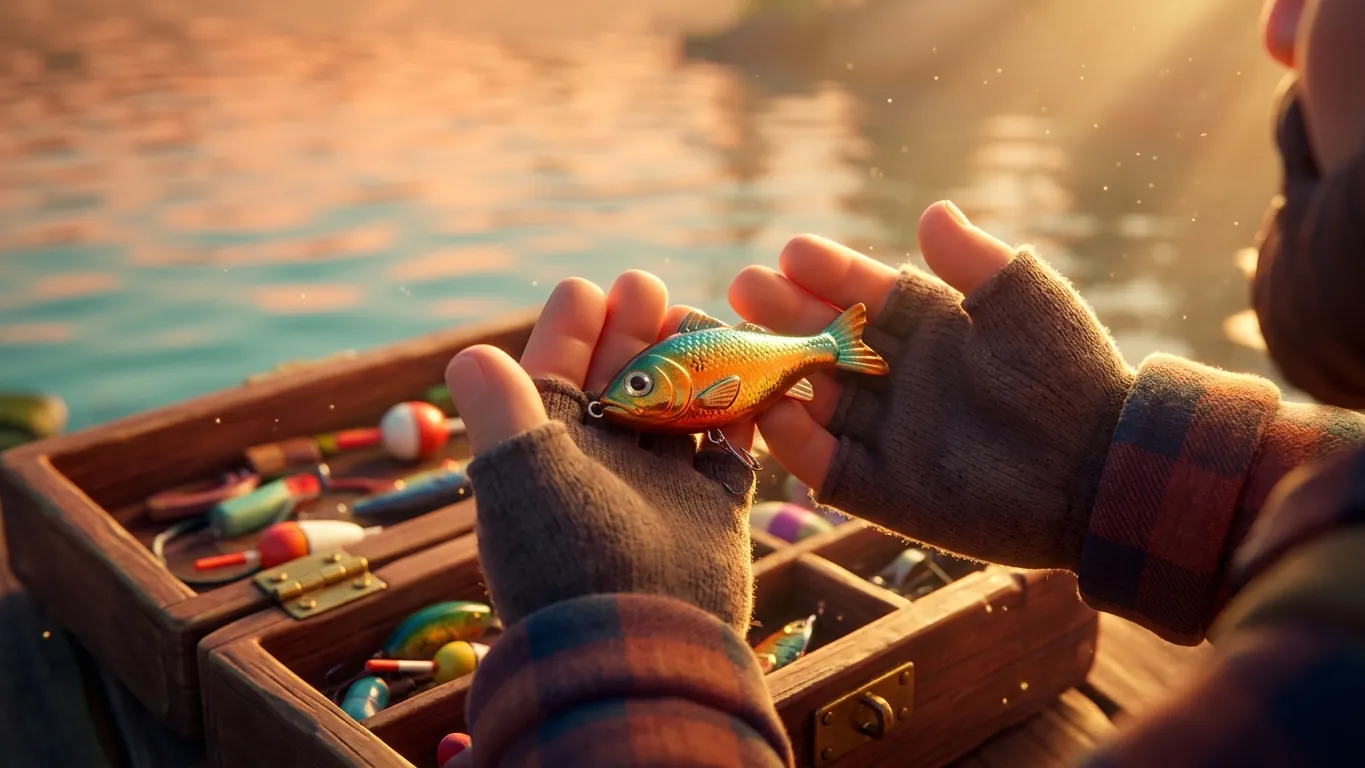
Many fishing games link specific fish to specific baits or lures. Some fish only bite on natural bait, others prefer fast-moving lures, and a few rare species may need something special. Even in simpler fishing minigames, better bait can increase how often fish approach your line.
This is part of what makes virtual fishing fun. Instead of casting the same thing everywhere, you experiment, notice what works and slowly build up your knowledge. If you have been sitting in one spot without a bite for a while, the lure on your line is one of the first things worth changing.
Games that separate bait from lures usually treat them a little differently. Natural bait such as worms, insects or small baitfish tends to be simple to use. You cast it, let it sit and wait for a fish to find it. It is often a good choice for beginners and for calm, patient sessions.
Artificial lures usually ask more from you. Many games expect you to retrieve them in a certain way, such as steady reeling, short twitches or stop-and-go movement. The reward is that lures can cover more water and may attract bigger or more active fish. Some games also let lures last longer, while bait gets used up.
Names and details vary from game to game, but these lure styles appear in many fishing titles.
Flashy lures with a spinning blade, often useful for active fish in moving or open water.
Flexible lures shaped like worms or small creatures, frequently used near the bottom or around cover.
Lures that float and splash on the surface, often tied to early morning or evening fishing.
Body-shaped lures that dive to a certain depth when reeled, handy for targeting mid-water fish.
Weighted lures that you bounce along the bottom, usually suited to deeper or slower fish.
A helpful way to choose a lure is to think about where the fish are likely to be. Surface lures make sense when fish are feeding near the top, often in low light. Diving lures work for the middle layer of water. Jigs and soft plastics are often the go-to choice for fish holding near the bottom.
Many games also connect lure success to time of day, weather or water clarity. Bright, flashy lures may stand out in murky water, while more natural colours can suit clear lakes. If your game offers a fish guide or journal, check it for hints about what each species prefers. Combining that information with your own trial and error is usually the quickest way to improve.
You do not need every lure in the game to have a great time. A compact selection that covers the surface, the middle and the bottom will handle most situations. Add a reliable natural bait for relaxed sessions and one or two lures in different colours for changing light.
As you unlock new areas, pay attention to which fish live there and adjust your box accordingly. If inventory space is limited, keep the lures you actually use and set aside the ones that rarely get wet. A tidy tackle box makes it easier to switch quickly and keeps the focus on enjoying the water.
 Reading the Water: Where Virtual Fish Like to Gather
Learn how to find fish more often in fishing games by reading structure, depth, shade and current, and by using in-game hints wisely.
Read more
 Mastering Line Tension Without the Stress
Struggling with snapped lines? Learn how line tension usually works in fishing games and follow a calm routine for landing larger virtual fish.
Read more
 Why Fishing in Games Feels So Relaxing
An opinion piece on why fishing activities in video games feel so calming, from gentle rhythm to unhurried collecting, and when they become a chore.
Read more